
Dr. Robbie Bahl on TMS, Antidepressants, and Treatment-Resistant Depression
TMS, antidepressants, and treatment-resistant depression are big topics at Shanti TMS in Portland, Oregon.
We sat down with Shanti TMS’ Medical Director, Robbie Bahl, MD to hear his thoughts on TMS (Transcranial Magnetic Stimulation), antidepressants and Treatment-Resistant Depression, or TRD.
About Dr. Robbie Bahl
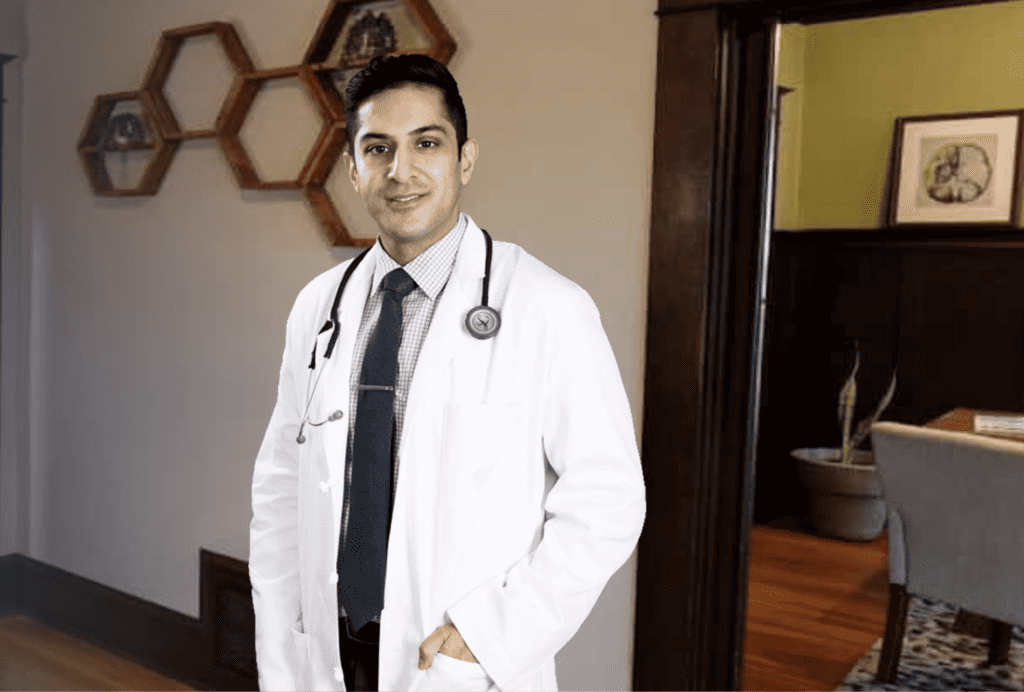
Dr Bahl is a Columbia University-educated, triple board-certified physician with over a decade of experience in caring for patients with behavioral health and mental health concerns. He is proud to oversee one of the only non-corporate “mom and pop” TMS clinics in the Portland area.
Dr. Bahl is well-versed in TMS for depression, chronic pain management, Suboxone and Buprenorphine therapy, and psychotherapy. In collaboration with the rest of the tight-knit team at Shanti TMS, Dr. Bahl applies a holistic approach to depression treatment that integrates behavioral therapy, nutrition, and wellness into patient care.
——————————————————————
TMS, Antidepressants, and Treatment-Resistant Depression: The Interview
—————————————————————–
Hi, Dr. Bahl! Today, we’re diving into a question many individuals facing depression grapple with: “TMS therapy vs. antidepressants: which is better?” It’s a complex topic, and we’re grateful to have your expertise.
Dr. Bahl: Thank you for chatting with me. It’s an incredibly important discussion. Both TMS therapy and antidepressants offer valuable pathways to relief for my patients. The key, as we’ll explore, lies in understanding their nuances and determining which approach is best suited for an individual’s unique situation.
Let’s start with the basics. For someone newly diagnosed with depression, what’s typically the first line of treatment they might encounter?
Dr. Bahl: Most often, the initial approach involves antidepressant medications, sometimes combined with psychotherapy.
Antidepressants work by adjusting the balance of neurotransmitters in the brain. For many individuals with milder to moderate depression, these medications can be quite effective. They are widely accessible and, for some, provide sufficient relief.
And where does TMS therapy fit into this picture? Is it a primary treatment, or something considered later?
Dr. Bahl: Transcranial Magnetic Stimulation, or TMS therapy, is primarily considered for individuals who haven’t found adequate relief from antidepressants. It’s FDA-approved for what we call Treatment-Resistant Depression (TRD), meaning someone has tried at least one, and often two or more, antidepressant medications without significant improvement.
Think of it as a powerful, non-invasive option when traditional pharmacological routes haven’t yielded the desired results.
Treatment-Resistant Depression Remission Rates for TMS Versus Antidepressants
Let’s talk about effectiveness. When we compare TMS to antidepressants, particularly for those with TRD, what do the numbers tell us about response and remission rates?
Dr. Bahl: This is where the distinction becomes quite clear, especially for TRD.
Studies show that TMS therapy, particularly repetitive TMS (rTMS), can achieve response rates (meaning a significant reduction in symptoms, often 50% or more) ranging from 37.5% to as high as 80%. This is a stark contrast to switching antidepressants in TRD, which typically sees response rates around 14.6%.
When we look at remission rates, which signifies a return to a state of being virtually symptom-free, TMS again demonstrates superior outcomes for TRD. Remission rates with TMS range from 27.1% to 59%, while for those continuing to switch antidepressants, it’s closer to 4.9%. That’s staggering.
After we’ve tried two, three, four different antidepressants with no luck, it might be time to improve our odds of success and take a look at something like TMS.
That’s a significant difference. Are there specific symptoms where TMS might be particularly effective compared to medication?
Dr. Bahl: Absolutely. While antidepressants can help with depression symptoms broadly, TMS has shown superior reduction in especially troubling co-occuring symptoms like anhedonia, the inability to feel pleasure, and anxiety. These are often some of the most debilitating aspects of depression, and seeing better outcomes in these areas with TMS can be so encouraging for my patients and make a huge difference in their ability to enjoy their lives.
Once someone achieves relief, how long can they expect it to last with each treatment?
Dr. Bahl: With antidepressants, relief is often only sustained as long as the person continues to take the medication. If you stop taking your medication, symptoms often return.
For TMS, the duration of relief can be quite impressive. Many studies show sustained relief for over a year in a significant portion of responders.
For example, 65.8% of responders maintained their relief for more than one year. It’s also worth noting that combining TMS with ongoing medication or psychotherapy can further enhance and maintain these positive outcomes.
It’s not always an either/or; sometimes, it’s just about finding the best combination of approaches to tackle TRD.
Side Effects, TMS, Antidepressants and Treatment-Resistant Depression
Side effects are a major concern for many patients. How do TMS and antidepressants compare in this regard?
Dr. Bahl: This is a crucial point of differentiation where TMS really shines. Antidepressants can come with a range of systemic side effects: weight gain, fatigue, sexual dysfunction, gastrointestinal issues, and more. For some, these side effects can be severe enough to cause them to discontinue treatment. Even if the medication is actually helping their depression, it’s also causing these other unwanted symptoms.
TMS, on the other hand, is remarkably well-tolerated. The most common side effect is a mild headache or scalp discomfort at the treatment site. If that’s going to happen, we’ll often see that happening during the first week of treatment. It’s typically mild and transient.
Importantly, TMS has no systemic side effects, no dependence issues, and no withdrawal symptoms. It’s a non-invasive treatment that doesn’t circulate throughout the body. This makes it a very safe option, especially for those who are sensitive to medication side effects.
Beyond side effects, what are some other practical considerations for patients choosing between these options?
Dr. Bahl: Accessibility is a big one. Antidepressants are widely available through primary care physicians and psychiatrists. TMS, however, requires specialized equipment and trained professionals. The treatment course for TMS typically involves daily sessions, five days a week, for several weeks – usually 4 to 8 weeks. This commitment to consistency is vital for its effectiveness.
At Shanti TMS, we understand these practicalities. We offer a convenient location in Portland, making it easier for patients to maintain that steady treatment schedule. We also pride ourselves on providing care that is personal and consistent. Unlike larger corporate providers, our patients are treated by the same dedicated team, and a physician is always on-site and available during every appointment.
This kind of consistent, physician-led care can really make a significant difference in the patient experience and outcome. It’s hard to heal when you feel like you’re just a number. At Shanti TMS, we take pride in providing personalized, friendly care and taking the time to really get to know our patients and their treatment goals.
Cost Effectiveness of TMS Versus Antidepressants for Treatment-Resistant Depression
Let’s touch on cost. Is TMS a more expensive option?
Dr. Bahl: While the initial outlay for a course of TMS might seem higher than a prescription, studies suggest that TMS can actually be more cost-effective in the long run. When you factor in the potential for sustained relief, reduced need for ongoing medication, and improved quality of life, TMS can definitely lead to significant long-term savings.
For instance, some research indicates over $11,000 in savings for younger adults due to shorter, more definitive treatment courses compared to years of medication. Many insurance providers now cover TMS therapy, and that’s because they’re beginning to recognize its value for TRD. If TMS can solve the problem once and for all in some cases, then why spend our resources on years and year of medications? From a patient perspective, the potential to finally have an effective “one-and-done” treatment is pretty appealing, too.
What are the current trends in the mental health field regarding these two treatments?
Dr. Bahl: The trend is increasingly clear: for Treatment-Resistant Depression, TMS is gaining significant traction and becoming a preferred option after a couple of failed antidepressant trials. Expert consensus is increasingly favoring TMS over continued medication switching in these cases.
We’re also seeing a rise in combination therapies – using TMS alongside antidepressants or psychotherapy – to achieve even better and longer-lasting remission rates. That’s especially true for severe cases. The field is moving towards a more personalized approach, where treatment plans are tailored to the individual’s response and needs, which is a great trend that I wholeheartedly support and hope to see more of in the future.
Wrapping It Up: When is TMS a Good Choice for Treatment-Resistant Depression?
So, to summarize, when should someone consider TMS therapy?
Dr. Bahl: If you’ve been struggling with depression and have tried at least two antidepressant medications without achieving satisfactory relief, TMS may be a good fit. If you’ve experienced intolerable side effects from medication, then TMS therapy is absolutely something you should explore as an option for moving forward.
We’re always happy to help people weigh their options and get questions answered as they evaluate the next step in their recovery journey. For some patients, that ends up being TMS. For other patients, TMS ends up not being a good fit for whatever reason. That’s fine. There is no “one-size-fits-all” solution to a problem like treatment-resistant depression.
Patient-centered care should be the standard of care everywhere because it’s so important that patients feel safe and comfortable with their providers. And my team and I are all about empowering our patients to make informed choices about their health.
Thank you, Dr. Bahl, for this incredibly insightful discussion.
Dr. Bahl: My pleasure. The most important message I hope people take away today is that there is never a situation where a patient has a reason to lose hope for relief when it comes to depression. There is always hope. I have seen patients get well after suffering with this illness for years and years with my own eyes.
Take the time to really understand your options. Whether that’s medication, TMS, another route, or a combination of all of these approaches. If you need help weighing your options and understanding the pros and cons, my team is always here to help guide you on that path.
Thanks again, Dr. Bahl.
Dr. Bahl: You bet.
————————
Interested in working with Dr. Bahl in SE Portland, Oregon to address Treatment-Resistant Depression?

If you or a loved one has been struggling with depression that hasn’t responded to traditional treatments, it may be time to consider TMS therapy.
TMS offers a safe, non-invasive, and highly effective alternative for many individuals who felt they had run out of options.
At Shanti TMS, we are committed to helping our treatment-resistant depression patients rediscover a sense of hope about the future and about actually feeling better. We believe in evidence-based treatment and attentive care that truly puts the patient first. If you’ve been searching for lasting relief from depression, TMS might be your next best step.
To learn more about this innovative, non-invasive treatment and to see if it’s the right option for you, we invite you to visit Shanti TMS. You can also give us a call at (503) 206-8850. Our dedicated team in SE Portland is ready to answer your questions and provide the personalized care you deserve.