
If you have tried antidepressants, worked with a therapist, and still do not feel like yourself, you are not alone, and you have not run out of options. At Shanti TMS, we work exclusively with transcranial magnetic stimulation, an FDA-approved therapy that uses gentle magnetic pulses to stimulate the areas of the brain involved in mood. Our clinical team brings a level of precision and experience to each session that a general practice simply cannot replicate. TMS for treatment-resistant depression in Portland was developed for exactly this situation, when other approaches have been tried sincerely and the relief has not followed.
What Is Treatment-Resistant Depression?
Treatment-resistant depression, also referred to as treatment-refractory depression, describes major depressive disorder (MDD) that fails to respond to at least 2 antidepressant medications taken at adequate doses for a clinically sufficient period. According to the National Institute of Mental Health (NIMH), roughly one-third of people living with depression experience this level of resistance. The condition affects patients across all age groups and can lead to deep discouragement after years of effort with little measurable progress. For many, each failed medication trial narrows the sense of what might actually help.
Depression that persists despite medications and talk therapy is rarely the result of a single factor. Some patients have brain chemistry that does not respond well to standard antidepressants, even after multiple trials at the right doses. Others are managing chronic pain, past trauma, or hormonal shifts that quietly work against any progress a medication might otherwise make. Genetics also play a role, which is why a drug that helps one person can have no effect whatsoever for another, and why a single pharmaceutical approach so often falls short for people who have already tried so hard to get better.

Signs You May Have Treatment-Resistant Depression
Treatment-resistant depression follows a recognizable pattern, even when it does not feel that way from the inside. Repeated medication trials with little to show for them, periods of feeling slightly better followed by a slide back, and symptoms that simply will not fully lift are all worth paying attention to. For those considering TMS for treatment-resistant depression in Portland, the first step is understanding what has and has not worked in the past. At Shanti, our evaluation process looks at that full history before anything else, including which medications were used, at what doses, and for how long. Understanding what has already been tried gives our team a much clearer picture of what your brain may actually respond to.
Common signs that depression may be treatment-resistant include:
- Little or no improvement after trying several antidepressant medications at appropriate doses
- Temporary periods of relief followed by a return of symptoms
- Persistent fatigue, low motivation, or emotional flatness that does not lift with standard interventions
- Feelings of hopelessness despite consistent and sustained engagement with a provider
- Sleep or appetite disruptions that have not resolved after multiple treatment attempts
- A loss of interest in daily activities that were once meaningful
When these signs are present alongside other conditions, the path to relief becomes more complicated. Co-occurring diagnoses such as anxiety disorders, obsessive-compulsive disorder, or chronic pain can reduce the overall effectiveness of antidepressant therapy, not because the medications are entirely wrong, but because the underlying neurology involves more than one interconnected system. Addressing these overlapping factors is part of how we approach each patient evaluation.
Why TMS Works When Other Treatments Fall Short
Standard antidepressants work by altering neurotransmitter activity across the brain, meaning the entire body absorbs them rather than any single targeted region. Genetic variation plays an important role in how a person metabolizes these medications. For some patients, the pharmacological effect is insufficient or produces side effects that make continued use untenable. Cognitive dullness, weight fluctuation, and disrupted sleep are among the common reasons patients discontinue antidepressants before a full response can develop. Even when medication is tolerated well, residual symptoms such as poor concentration or persistent low energy often remain.
Talk therapy offers real value, but when the brain is not functioning the way it should, working through thoughts and feelings has limits. TMS for treatment-resistant depression in Portland addresses what is happening at the neurological level, using gentle magnetic pulses to stimulate the specific brain regions where activity has slowed. It does not enter the bloodstream, so the side effects that make so many people stop their medications, like weight changes, fatigue, or mental fog, are not part of the picture. TMS has carried FDA approval for depression since 2008, and the research supporting it has only grown stronger in the years since.
How Transcranial Magnetic Stimulation Treats Depression
One of the first questions people ask us is, “What does TMS actually do inside the brain?” It uses gentle magnetic pulses, similar in strength used in an MRI, to stimulate a specific area of the brain that tends to be less active in people with depression. That area, called the left dorsolateral prefrontal cortex, plays a central role in how we regulate mood, motivation, and emotional resilience. When it receives consistent stimulation over several weeks, the neural connections in that region begin to strengthen, and many people start to feel a gradual but real shift in how they think and feel day to day.
What makes transcranial magnetic stimulation different from medications is where it works. Antidepressants affect brain chemistry throughout the entire body, which is why side effects like fatigue, weight changes, or mental fog can be so disruptive. TMS focuses only on the specific region involved in mood regulation, leaving everything else untouched. For people who have spent years managing medication side effects on top of depression itself, that distinction tends to matter a great deal.
What to Expect During Sessions
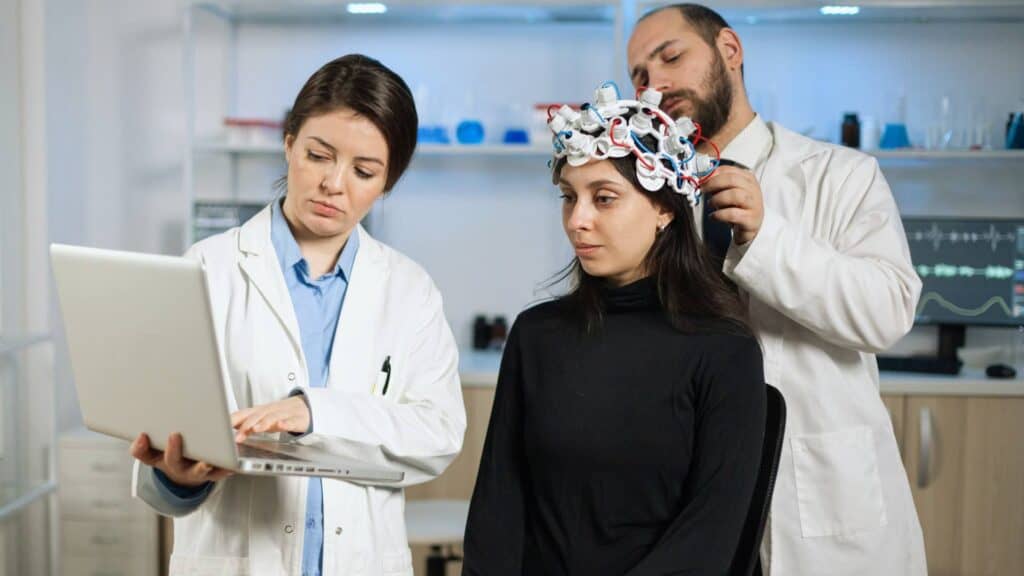
Each visit runs about 20 to 40 minutes, and you stay fully awake throughout. A clinician places a small magnetic coil against the side of your head and sends short pulses to the target area of the brain. Most people describe the sensation as a rhythmic tapping on the scalp and find it easy to tolerate after the first few visits. No sedation is used, so you can drive yourself and return to your day immediately after each appointment. Sessions run 5 days a week over several weeks, and most patients fit them around work, errands, or other regular commitments.
Is Transcranial Magnetic Stimulation Therapy Safe?
TMS has been FDA-cleared for depression since 2008 and carries a strong safety record. Some patients notice mild scalp tenderness or brief fatigue early on. Both tend to pass within a week or two. Before starting TMS for treatment-resistant depression in Portland, our team reviews your full medical history and a physician stays present throughout every appointment. If something feels off, it gets addressed right then. Patients who have felt rushed by previous providers often tell us that the level of attention is something they did not expect.
Does TMS Work for Treatment-Resistant Depression?
Clinical evidence supporting transcranial magnetic stimulation for treatment-refractory depression has grown steadily since FDA clearance, with findings across multiple studies pointing in the same direction. A substantial percentage of patients see significant reductions in depressive symptoms after completing a full course, and a portion reach full remission. Most people begin noticing shifts in energy, sleep, or mood between the 2nd and 3rd week of sessions. Follow-up research shows many patients maintain those gains for months after finishing, without needing to return right away.
Who Is a Good Candidate for TMS Therapy?
TMS for treatment-resistant depression is well-suited for patients whose major depressive disorder has not responded adequately to antidepressant medications or psychotherapy and who prefer a non-invasive, medication-free alternative. Candidates should be medically stable and able to commit to a regular outpatient schedule over several consecutive weeks. At Shanti, both adults and adolescents are evaluated for TMS eligibility, and no two plans are identical. Each course of therapy begins with a comprehensive clinical assessment that considers medical history, prior treatment attempts, and current symptom presentation.
Transcranial magnetic stimulation has also demonstrated effectiveness for anxiety disorders, obsessive-compulsive disorder, and certain chronic pain conditions in clinical research. Patients presenting with more than one of these diagnoses may find that targeted brain stimulation addresses overlapping symptom networks simultaneously. Our team reviews each patient’s complete clinical picture before making any recommendation, ensuring the proposed course of therapy aligns with their specific neurological and psychological profile.
Why Oregon Patients Choose Shanti TMS
Patients seeking TMS for treatment-resistant depression in Portland will find that our center operates differently from a general behavioral health clinic. Starting with physician ownership and on-site medical oversight at every visit. TMS is not a supplementary service here. It is the sole clinical focus of the practice, which means our team builds a depth of protocol expertise that a general behavioral health setting cannot replicate. Board-certified providers review current research regularly and adjust each patient’s protocol based on how the brain responds as sessions progress.
Shanti TMS coordinates actively with referring psychiatrists, primary care physicians, and therapists to maintain continuity across each patient’s broader mental health plan. Our Portland clinic serves the surrounding metro area, including patients from Beaverton, Tigard, and neighboring communities. The environment is calm and private, structured to feel welcoming rather than institutional. From the first consultation to the final follow-up, our team focuses on the full person, not just the diagnosis.

Maintaining Progress After Treatment Ends
Finishing a course of TMS is a real milestone, and we want to make sure you feel steady moving forward. Within a few weeks of your last session, we will schedule a follow-up visit to review how you are feeling and talk through what ongoing wellness looks like for your specific situation. Most patients hold onto the progress they made well after active sessions end. That appointment gives us an early opportunity to address anything that feels off. You do not have to wait for symptoms to worsen before reaching out.
For some patients, a handful of periodic maintenance sessions goes a long way toward holding onto the progress made during the initial course. Our physicians review each situation before making any recommendation, since the right level of follow-up at six months looks different for everyone. The team stays reachable long after the final appointment for questions, updates, or coordination with outside providers. We stayed involved during treatment, and that does not change once it ends.